
Jupiter in Astrology: Meaning, Influence, and Your Birth Chart

Jupiter is the largest planet in the solar system, and in astrology that scale translates directly into what it governs: expansion, abundance, and the broad philosophical lens through which we understand the world. In your birth chart, Jupiter’s position by sign and house shows where you’re most likely to grow, encounter opportunity, and experience good fortune. Jupiter in astrology represents the principle of increase — wherever this planet sits, that domain of life tends to develop and widen over time. It governs wisdom, higher education, long-distance travel, and the belief systems we form to make sense of existence. Jupiter takes approximately twelve years to complete one orbit of the Sun, spending roughly a year in each zodiac sign. Before the outer planets were discovered, Jupiter and Saturn were the two social planets, governing how individuals relate to broader institutions and inherited systems of meaning. In my decades of reading charts, Jupiter’s placement is consistently one of the first things I look at when a client wants to understand where life tends to flow with least resistance.
In this article:


Mythology and Symbolism
In Roman religion, Jupiter was the king of the gods — the supreme deity presiding over law, justice, and the welfare of the state. His Greek counterpart, Zeus, hurled thunderbolts from Mount Olympus and governed the fates of mortals and immortals alike. This mythological background runs directly through astrological interpretation: Jupiter in astrology carries the qualities of generosity, authority, and moral judgment.
Jupiter’s glyph is a stylized crescent elevated on a cross, traditionally read as spirit rising above matter. Symbolic associations extend to the oak tree and the eagle, both representing power, longevity, and expansive vision. In Babylonian star lore, Jupiter was identified with Marduk, the chief deity and patron of wisdom and prosperity. That linkage between Jupiter and civic order, abundance, and philosophical inquiry persisted through Greek, Roman, and Renaissance astrological writing.
Jupiter rules Sagittarius as its primary domicile — a sign known for optimism, philosophical inquiry, and the search for meaning through travel and learning. Jupiter also holds traditional co-rulership over Pisces, where its expansive qualities blend with emotional depth and spiritual imagination. Jupiter is exalted in Cancer, where its generosity and nurturing instincts combine to particularly productive effect.
Jupiter Meaning in Astrology
Jupiter in astrology represents the principle of expansion applied to whatever it touches. The zodiac sign and house where Jupiter sits in a birth chart reveals where growth, optimism, and occasional excess are most likely to gather. I find that clients often feel a kind of recognition when they hear about their Jupiter placement — it tends to describe areas of life that already feel more open to them.
Several overlapping themes define Jupiter in astrology, and I’ve found that most clients can identify at least one or two of these as areas where life has felt more generous than average:
Opportunity and abundance: Jupiter’s transits through a sign frequently coincide with opening doors, financial gains, and a general sense that conditions favor progress. Astrologers have long observed that natal Jupiter placements tend to correlate with inherited advantages in those life areas.
Philosophy and higher learning: Jupiter governs the formation of worldviews. The planet rules higher education, long-distance travel, and exposure to foreign cultures — all routes toward broadening the mind. A prominent Jupiter in a birth chart often correlates with curiosity about religion, law, metaphysics, or cross-cultural experience.
Growth and the risk of excess: Jupiter’s shadow side is overconfidence and overextension. Where Jupiter sits, a birth chart also shows where exaggeration or indulgence can become liabilities when the planet’s expansive energy runs unchecked.
Teachers and mentors: Relationships with professors, religious guides, and philosophical mentors often carry Jupiter themes. Jupiter’s aspects to personal planets frequently mark the encounters with teachers that most shaped a person’s worldview.
Jupiter in the Zodiac Signs
Jupiter’s zodiac sign at birth colors how its expansive energy expresses outwardly. Jupiter spends approximately one year in each sign, making sign placement a generational marker that nonetheless shapes individual expression through house position and aspects.
Jupiter in Aries
Jupiter amplifies Aries’ initiating, pioneering impulse. Growth arrives through bold action and independent ventures. People with this placement often find that opportunity follows when they move first rather than waiting for consensus.
Jupiter in Taurus
Jupiter expands through material security and sensory richness. Financial growth is a recurring theme, though the tendency to accumulate beyond necessity often accompanies the abundance.
Jupiter in Gemini
Communication and intellectual breadth define this expansion. Jupiter in Gemini grows through learning, writing, and building diverse networks. The risk is spreading attention too thin without developing depth in any direction.
Jupiter in Cancer
I’ve always considered this one of the most beautiful placements: Jupiter’s exaltation position, where its generosity and wisdom flow through emotional intelligence, family, and home. Protective instincts are strong, and domestic environments tend to reflect abundance over time.
Jupiter in Leo
Creativity and self-expression attract the most Jupiter-style rewards here. Jupiter in Leo expands through performance, leadership, and recognition. Public roles and artistic endeavors tend to produce tangible returns.
Jupiter in Virgo
Growth comes through service, craft, and disciplined refinement. Jupiter in Virgo may wrestle with perfectionism that stalls opportunity, but strong analytical ability and work ethic consistently pay off over time.
Jupiter in Libra
Partnership and negotiation become pathways to expansion here. Jupiter in Libra often correlates with beneficial alliances, legal successes, and growth that emerges through collaboration rather than solo effort.
Jupiter in Scorpio
Jupiter in Scorpio expands through depth, investigation, and the willingness to confront what others avoid. I’ve seen this placement produce remarkable financial instincts. Financial acumen and psychological insight are characteristic strengths. Transformation through crisis can be a recurring growth mechanism.
Jupiter in Sagittarius
Jupiter operates at maximum strength in its home sign. Philosophy, long travel, and formal education define this expansion. Optimism is natural and often justified, though follow-through requires conscious attention.
Jupiter in Capricorn
This placement channels Jupiter’s growth impulse through structure and disciplined ambition. Rewards tend to arrive steadily rather than in sudden windfalls. Jupiter in Capricorn correlates with achievement built through sustained, methodical effort.
Jupiter in Aquarius
Expansion happens through community, innovation, and idealism. I’ve noticed Jupiter in Aquarius often correlates with reformist tendencies and gains made through group endeavors and social networks.
Jupiter in Pisces
Jupiter’s traditional co-rulership of Pisces shows as spiritual depth, compassion, and creative imagination. Dreams and intuition tend to be well-developed. Growth can arrive through indirect, unexpected routes. Astrologers working with Pisces placements frequently note how Jupiter here amplifies the sign’s receptive and imaginative qualities.


Jupiter in the Houses
The house holding Jupiter in the birth chart reveals which domain of life most directly receives its expansive energy. While sign describes how Jupiter expresses, house shows where growth and opportunity tend to concentrate. In my reading practice, I always look at both together — neither factor alone tells the full story.
Jupiter in the 1st House
Personal presence and physical vitality expand. People with this placement often carry an air of optimism, and first impressions tend to work in their favor. Generosity is usually visible in demeanor.
Jupiter in the 2nd House
Financial and material growth characterize this position. Jupiter in the 2nd house correlates with expanding earning capacity over time, though overconfidence about resources can occasionally create instability.
Jupiter in the 3rd House
Communication skills and learning benefit directly. Short-distance travel, writing, and local community connections tend to open doors. Teaching and journalism are career areas that often suit this placement well.
Jupiter in the 4th House
Family background and the private emotional foundation are areas of expansion. Jupiter here may indicate a prosperous or supportive family of origin, and domestic life often grows more comfortable with age.
Jupiter in the 5th House
Creativity, children, and romantic affairs all receive Jupiter’s expansive energy. This placement appears with notable frequency in the charts of artists, performers, and people who raise large families.
Jupiter in the 6th House
Work routines and health practices become growth arenas. Jupiter in the 6th house frequently correlates with careers oriented toward service or healing, and working conditions tend to improve steadily over time.
Jupiter in the 7th House
Business and personal partnerships become consistent pathways to expansion. The right collaborators tend to arrive, and Jupiter in the 7th house often marks someone who attracts generous and capable partners.
Jupiter in the 8th House
Shared finances, inheritance, and psychological depth are growth domains here. Jupiter in the 8th house correlates with financial gains through other people’s resources — inheritances, insurance, or investment partnerships.
Jupiter in the 9th House
Jupiter in its natural house operates most freely. Higher education, long-distance travel, publishing, and philosophical exploration all tend to reward effort generously. Academic and legal careers suit this placement well.
Jupiter in the 10th House
Career trajectory and public reputation expand with this position. Jupiter in the 10th house appears in the charts of people who achieve prominence or whose work reaches a broad audience.
Jupiter in the 11th House
Social networks, group affiliations, and long-term aspirations attract Jupiter’s benefits. Friends and communities often prove instrumental in opening opportunities, and collective ventures tend to grow.
Jupiter in the 12th House
Expansion happens in private: through solitude, contemplative practice, or work conducted behind the scenes. Jupiter in the 12th house can bring unexpected blessings through institutions, charitable work, or spiritual disciplines.
Retrograde Jupiter
Jupiter stations retrograde approximately once per year, remaining in backward apparent motion for roughly four months. Retrograde Jupiter in a birth chart is not an adverse marker — approximately 30% of the population carries this natal position, which limits its weight as a rare influence.
What retrograde Jupiter suggests in a birth chart is an internalized approach to its characteristic themes. Where a direct Jupiter tends to expand outward through visible optimism and public opportunity, a retrograde Jupiter develops wisdom through reflection, private study, or by revisiting beliefs formed in earlier life. My experience with retrograde Jupiter clients is that their growth often accelerates when they stop pushing forward and start asking whether they’ve built on the right foundation. The expansion was always there — it just moves inward first.
During Jupiter retrograde transits, opportunities initiated in that window sometimes require more groundwork before they yield results. Projects launched under Jupiter retrograde frequently benefit from revision before the planet resumes direct motion.
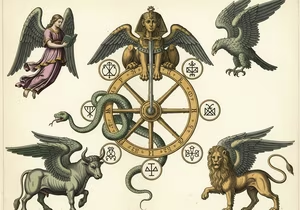
Jupiter’s traditional correspondence with the Wheel of Fortune in tarot captures something real about how this planet operates: fortune cycles, expansion follows contraction, and the wheel turns whether or not we’re paying attention. That correspondence spans both astrological and tarot traditions for good reason.
Common Questions About Jupiter in Astrology
What does Jupiter represent in astrology?
Jupiter in astrology represents expansion, abundance, philosophical wisdom, and good fortune. Its position in the birth chart — by sign and house — shows where growth and opportunity tend to concentrate most naturally across a person’s life.
Which zodiac sign does Jupiter rule?
Jupiter rules Sagittarius as its primary domicile and traditionally co-rules Pisces. Jupiter is also exalted in Cancer, where its generous, wisdom-oriented qualities find particularly productive expression.
How often does Jupiter change signs?
Jupiter spends approximately one year in each zodiac sign, completing its full orbit of the Sun in roughly twelve years. The twelve-year Jupiter cycle is one of the most widely used timing indicators in traditional and modern astrology.
What does retrograde Jupiter mean in a natal chart?
Retrograde Jupiter in the birth chart indicates an internalized approach to the planet’s themes. Growth and philosophical development tend to proceed through reflection and revisiting rather than outward expansion. It does not indicate blocked luck or reduced fortune in standard astrological tradition.
How does Jupiter’s house position differ from its sign position?
Jupiter’s zodiac sign describes the style and quality of its expansive energy — philosophical and direct in Sagittarius, emotionally nuanced in Cancer, structured in Capricorn. The house position identifies the specific life domain where that energy concentrates: career in the 10th house, partnerships in the 7th, home and family in the 4th. Both factors work together to give a complete picture of Jupiter in any individual birth chart.


