
Dream About Deer: Dream of Deer Meaning, Symbols, and Interpretation
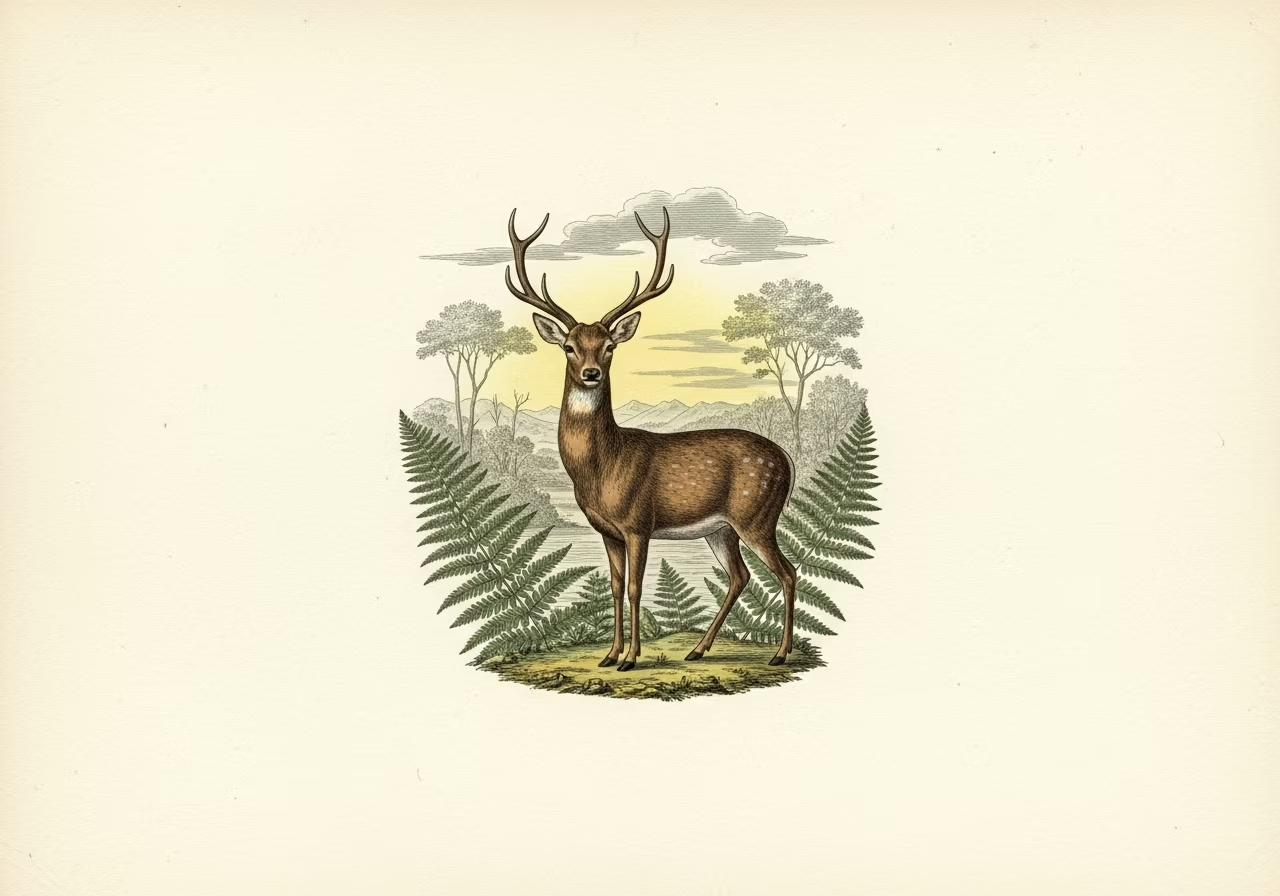
When a deer appears in your sleep, the image tends to linger long after waking. That still, watchful presence at the edge of a clearing isn’t easy to shake. The dream of deer meaning most often points toward gentleness, heightened awareness, and a quiet call to move through difficult situations with grace rather than force. Dreams about deer aren’t warnings or omens. In my years of working with dream imagery, this symbol surfaces most reliably during periods of transition, when the dreamer is learning to trust their instincts without pushing too hard against whatever stands in the way. Dreaming of deer can also reflect a sensitivity you carry into waking life, a tenderness you may be protecting or quietly trying to hide. Whatever the scenario, a fawn in the garden or a stag on a hillside, the deer dream meaning returns again and again to the same core themes: presence, alertness, and the peculiar wisdom of knowing when to stay still.
In this article:
- Common Scenarios
- Colors and Meanings
- Spiritual and Cultural Interpretations
- Psychology
- What Your Emotions Tell You
- What to Do After
- Common Questions
Common Scenarios in Deer Dreams
The cluster of deer dreams breaks down along fairly consistent lines. Each scenario reflects a different angle on the same core symbolism, and the specific details of your dream matter more than any single interpretation pulled from a dream dictionary. The setting, the deer’s behavior, and the feeling you carry out of sleep all shape what a deer dream means for you.
Dreaming of a Deer Watching You
One of the most frequent deer dream scenarios involves the animal simply standing and watching, making eye contact across a meadow or from the edge of a tree line. I’ve found that dreaming of deer in this posture surfaces most often when the dreamer is being asked by circumstance to pay closer attention to something they’ve been moving past too quickly. The deer isn’t threatening. It holds its ground, and you hold yours. That mutual watching points to a moment of recognition, the sleeping mind reaching for a kind of reciprocal awareness the waking self has been missing.
Dream About Deer Chasing Me
A dream about deer chasing you often startles people, because deer don’t typically read as threatening animals. But when a deer pursues you in sleep, it rarely carries the same charge as a predator dream would. The deer in dream scenarios involving pursuit usually represents something the dreamer’s been running from that isn’t actually dangerous: a truth, an emotion, a conversation they’ve been postponing. The animal’s gentleness is part of the point. You’re being followed by something that means you no harm but won’t stop appearing until you face it. Unlike what I’ve seen in bear dreams, where the chasing energy often signals something more primal and raw, the deer that pursues is quiet and persistent rather than aggressive.
Dream About a Deer Attacking You
When the deer in your dream moves aggressively, charging or knocking you down, the emotional register shifts. A dream about a deer attacking can signal that the dreamer’s experiencing their own gentleness or sensitivity as a threat rather than a resource. This deer dream image sometimes surfaces when someone’s been suppressing a softer part of their nature and that suppressed quality is beginning to push back. In other cases, a deer attacking in a dream reflects conflict with someone who presents themselves as harmless but is causing real disruption in the dreamer’s waking life.
Dream About a Deer Fawn
Dreams featuring a deer fawn almost always carry associations with new beginnings, vulnerability, and the early stages of something not yet fully formed. A dream about deer fawn tends to appear during periods when the dreamer’s starting a project, a relationship, or a chapter of life that still feels fragile. The fawn in the dream asks: what are you tending right now that’s young and needs careful handling? It’s less a warning than a prompt from the sleeping mind to stay attentive to something still in formation.
Dream About Deer with Antlers
The stag or buck brings a different quality into the deer dream. A dream about deer with antlers generally introduces themes of personal authority, natural cycles, and the kind of earned presence that comes not from effort alone but from time and experience. Antlers grow, shed, and regrow. They’re associated with seasons and with the willingness to release what belongs to a previous cycle. If you dream of a deer with particularly large or striking antlers, the image often corresponds to a moment when the dreamer’s stepping more fully into their own sense of direction and authority.
Dream About a Deer in Your House
When deer appear inside a domestic space, a dream about deer in house, standing in the kitchen or gazing through a hallway, the image mixes the wild and the familiar in a way that feels both strange and significant. Deer in the house in a dream often reflect a quality of the natural world, or of the dreamer’s own wilder nature, pressing into the spaces where life is ordinarily managed and controlled. This deer dream meaning can suggest that something the dreamer’s been keeping outside their normal awareness is now asking for acknowledgment.
Colors and Their Meanings in Deer Dreams
The coloring of a deer in dream imagery often shapes its significance in ways that a generic reading of the symbol alone would miss.
A brown deer is associated with groundedness, practical intuition, and connection to the rhythms of the earth. Brown deer dreams often appear during periods of steady, reliable forward movement, when the dreamer’s doing quiet work that’ll eventually show results.
A white deer carries a long lineage of significance across many traditions. In deer dream imagery, a white deer tends to signal a moment of unusual clarity, a glimpse of something pure or rare that the dreamer’s being offered access to. White deer in dreams rarely appear without some feeling of importance attached. The image tends to stay with the dreamer for days.
A black deer works differently from either of the above. Where the white deer opens, the black deer deepens. Black deer dream imagery frequently corresponds to an encounter with what Jungian analysts call the shadow, aspects of the self that aren’t yet integrated, or qualities that’ve been kept in the dark. This isn’t necessarily a difficult experience. The black deer in dream can mark the beginning of meaningful self-examination.
Spiritual and Cultural Interpretations of Deer Dreams
Deer carry significant symbolic weight across cultures, and those accumulated layers of meaning often surface in deer in dream interpretation without the dreamer consciously calling them up.
In many Native American traditions, deer represent gentleness of spirit and the ability to move through the world without causing harm. A deer in dream imagery within these frameworks is often read as a message about approach: move softly, without aggression, with respect for the surrounding environment. The deer’s a figure of right relationship, with the self, with others, with the natural world.
In Celtic tradition, deer, particularly the white stag, were figures tied to the otherworld, to threshold experience, and to the liminality between one state and another. In my experience, deer dreams with this quality of crossing or threshold tend to arrive exactly when someone is between two significant life states. Dreams featuring a deer in Celtic symbolic terms often pointed to a moment of crossing, whether the dreamer was conscious of it or not.
Christian iconography has historically associated the deer with longing and spiritual seeking, drawing on the psalm image of a deer searching for streams of water. A deer dream from this perspective might reflect a period of quiet spiritual hunger or a longing that hasn’t yet found its object.
Across several East Asian traditions, deer are symbols of longevity, good fortune, and the quiet luck that comes with living in alignment with natural rhythms. Dreams about deer meaning in these contexts often indicate a positive period ahead, though typically one that requires patience rather than active pursuit.
For those familiar with astrology, the deer’s lunar associations connect naturally with the sensitivity and intuition of Cancer, a sign governed by the Moon and associated with protective, nurturing awareness. Those qualities mirror the deer’s own symbolic character closely. The stone moonstone has long been linked to dream awareness and lunar sensitivity, and I’ve noticed it appears in traditions that also honor the deer as a guide figure.
Psychology Behind Deer Dreams
From a psychological angle, deer in dreams belong to a well-established category of gentle animal imagery that surfaces when the dreamer’s navigating questions about vulnerability, sensitivity, and the relationship between strength and softness.
Freud’s framework would likely connect the deer dream meaning to the dreamer’s relationship with their own gentler impulses, particularly those they’ve learned to keep controlled in waking life. The fleeing deer in Freudian terms often represents repressed or carefully defended emotion.
Jung’s approach finds more productive ground here. Deer in Jungian dream analysis frequently appear as what he called psychopomps, figures that guide the dreamer toward unconscious material. The deer’s alertness and responsiveness in dream imagery aligns closely with what Jung called the intuitive function: the capacity to sense what’s approaching before it fully arrives. Dreams about deer meaning in Jungian terms often point to a period of heightened receptivity, when the unconscious is particularly active and the dreamer’s being asked to listen more carefully.
Modern dream researchers, working outside the interpretive frameworks of either Freud or Jung, note that animals in dreams generally correspond to emotional states the dreamer has difficulty naming directly. The deer, with its combination of alertness and vulnerability, tends to appear when the dreamer’s navigating a situation that requires both attention and restraint. I’ve found this combination — needing to pay attention while also not pushing — to be exactly what most deer dreamers are dealing with in their waking lives. Dreams about deer are particularly common during life transitions, career changes, relationship shifts, losses, relocations, when the psyche’s calibrating a new balance between what was and what’s coming.
In my years of working through dream imagery with people, I’ve noticed that the dream of deer meaning tends to arrive at a very specific moment: not when someone’s in crisis, but when they’re standing at the edge of one, deciding whether to step back or step forward.


What Your Emotions Tell You
The emotional texture of a deer dream matters as much as the imagery itself. Two people can dream of the same scene and wake with completely different feelings, and those feelings are often the most direct signal the dream is offering.
If you wake feeling calm or unexpectedly moved, the image is usually an affirmation. The sleeping mind’s confirming that the gentler, more attentive approach you’ve been taking is working, even if the results aren’t yet visible. Many people who report positive deer dreams are going through periods of careful, considered growth.
If the dream left you feeling uneasy or chased, the key question is what you’ve been avoiding. The animal that pursues or unsettles in a dream typically represents something the dreamer knows, at some level, needs attention. The discomfort’s less about danger and more about the postponement of something necessary.
Fear during a deer attack dream sometimes reflects a cultural assumption, that the natural world, or the natural self, is something to be managed rather than engaged. This deer dream meaning can invite a re-examination of that assumption.
Longing or quiet grief after a deer dream, particularly after dreaming of a fawn or a deer that disappears into the trees, often corresponds to feelings of tenderness toward something fragile in the dreamer’s life. The image captures something the waking mind may not yet have language for.
What to Do After This Dream
Dreams about deer meaning rarely demand dramatic action. But they do tend to leave something worth working with if you’re willing to sit with the image rather than immediately explaining it away.
Write down the specific details. Not just “I dreamed about a deer” but what the deer was doing, where it stood, what its eyes looked like, what you felt in your body as you watched it. Deer dream interpretation depends heavily on context. A brown doe in a clearing carries different information than a white stag in the room where you grew up.
Notice what you’ve been rushing past. Deer as a symbol consistently ask for a kind of quiet attention. After a deer dream, scan your waking life for situations where you’ve been moving too fast or not pausing long enough to observe what’s actually happening around you.
Pay attention to relationships that call for a lighter touch. Deer dreams often appear when the dreamer’s navigating situations that require gentleness: relationships where someone’s feeling vulnerable, creative projects in early stages, or any dynamic where pressure would be counterproductive.
Look at what the dream’s asking you to tend. If the dream featured a fawn or an injured deer, the question is specific: what in your life is young, fragile, or in need of protection right now? The sleeping mind chose that image for a reason.
Stay with the feeling longer than you think you need to. Deer dream meaning tends to unfold over several days rather than resolving immediately. Write the dream down and revisit it a week later. Often the interpretation becomes clear only when you can see how the image rhymes with something that happened in the days after waking.
Common Questions About Deer Dreams
What does a deer dream meaning typically indicate?
Deer dream meaning most often points toward gentleness, alertness, and the capacity to move through difficult circumstances with grace. Deer aren’t threatening figures in most dream traditions, and deer dreams are generally considered positive or neutral in character. They tend to be signals about how to approach a situation rather than warnings about what to avoid.
What does it mean to dream about deer in your home?
When deer appear inside your house in a dream, the image typically reflects some quality of the natural world, or of your own wilder, less managed nature, pressing into the domestic spaces where ordinary life is run. The dream about deer in house can suggest that something you’ve been keeping outside your usual awareness is now asking for acknowledgment.
What does it mean to dream about a white deer?
A white deer in a dream carries associations with clarity, rarity, and liminal experience across multiple traditions. Dreams about deer meaning when the animal is white tend to appear during moments of genuine significance, when the dreamer’s crossing some kind of threshold, whether consciously or not. The image is rarely ordinary.
What does it mean to dream about deer chasing me?
A dream about deer chasing you usually represents an avoided truth or feeling rather than a genuine threat. Because the deer is inherently gentle, being pursued by one in a dream typically means something non-threatening is still following you. It’s often a feeling, a realization, or a conversation you’ve been putting off.
What does it mean to dream about deer with antlers?
A dream about deer with antlers, a stag or buck, introduces themes of personal authority, seasonal cycles, and earned presence. The antlers’ nature, growing, shedding, regrowing, connects this deer dream meaning to the dreamer’s own willingness to release what belongs to a previous chapter of life and grow into what comes next.
What does it mean to dream about a deer fawn?
Dreaming of deer as a fawn almost always corresponds to something new and vulnerable in the dreamer’s life. It’s typically a project, a relationship, or a part of the self that’s still in early stages and needs careful attention. The dream about deer fawn is less a warning than an invitation to stay present with what’s still forming.
What does it mean to dream about deer and what should I do?
People who wonder what does it mean to dream about deer meaning and symbolism often find the answer in three things: the specific behavior of the deer, the setting of the dream, and the feeling that stayed on waking. In general, the practical response involves slowing down, paying attention to what the dream image corresponds to in waking life, and asking what needs gentle handling right now rather than force.

