
Prophetic Dreams: When Sleep Predicts the Future
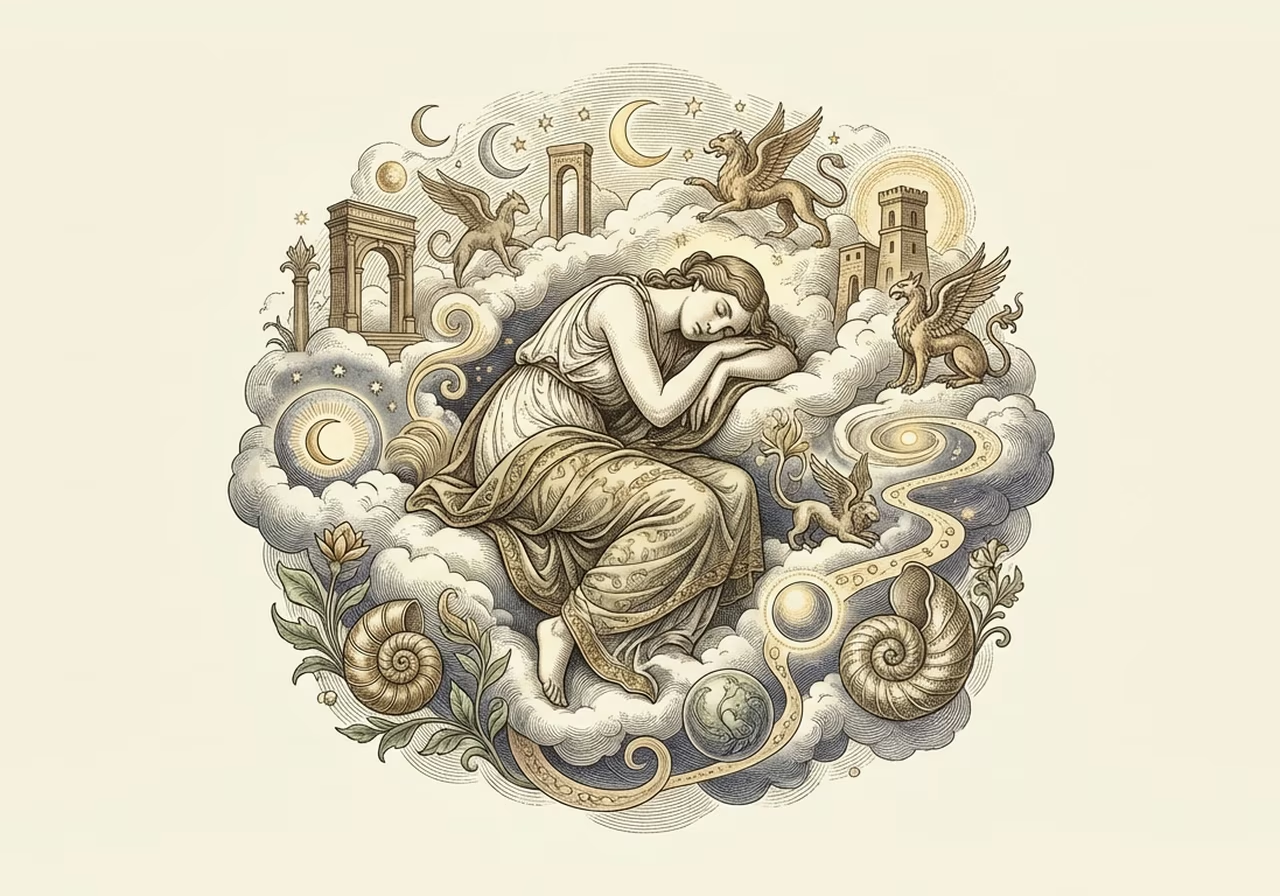
Prophetic dreams occupy a strange space between what we know and what we cannot explain. People wake from sleep with a scene so specific, so charged with some quality they can’t quite name, that when the event later unfolds—a phone call, a stranger’s face, an accident narrowly avoided—they find themselves searching for words. I’ve collected accounts like these for years, and the consistency across them is striking. These are not the fragmented loops of ordinary sleep. Prophetic dreams tend to arrive with a quality of clarity that most night visions lack: vivid color, a sense of presence, the feeling that something real has been communicated rather than merely dreamed.
Every major world culture has a name for this experience and a tradition built around it. The Egyptians constructed temple sanctuaries specifically for dream incubation, hoping to receive guidance from the divine. The Hebrew Bible describes visions from Joseph to Daniel. Indigenous traditions across the Americas, Africa, and Australia treat certain dreams as a form of direct knowing, inseparable from waking reality. Today, researchers study the same phenomenon through cognitive science, asking whether the sleeping brain can process information in ways the conscious mind can’t access.
Whether you call them precognitive, premonitory, or simply strange, prophetic dreams are worth taking seriously, not because they prove the supernatural, but because so many people, across so many centuries, keep reporting the same kind of experience.
In this article:
What Are Prophetic Dreams?
Prophetic dreams, sometimes called precognitive dreams or premonitory dreams, are sleep experiences in which the dreamer perceives an event before it occurs. The defining quality is specificity: not a vague feeling of dread, but a scene, a conversation, a face, a location that later matches a real event in verifiable detail.
Researchers typically divide precognitive dreams into two broad categories. The first involves literal imagery: you dream of a car accident on a specific road and, three days later, you drive past the aftermath of exactly that accident. The second is symbolic: you dream of water rising in your kitchen, and the following month your finances collapse. Both types appear in historical records and in contemporary accounts gathered by sleep researchers.
“Prophetic” carries religious weight, but the experience doesn’t require a theological framework. Many people who report precognitive experiences describe themselves as skeptical; they didn’t think the dream meant anything until it matched reality. The gap between the dream and the waking event ranges from hours to several years, though most documented cases fall within a few days.
What separates prophetic dreams from ordinary coincidence is pattern repetition. A single striking dream might be chance. Multiple specific matches—verified dates, specific names, accurate locations—across years of dreaming suggests something worth investigating.
Historical and Cultural Records of Prophetic Dreaming
The oldest written account of a precognitive dream appears in the Epic of Gilgamesh, composed roughly 4,000 years ago. Gilgamesh dreams of a falling star and a powerful figure, both interpreted by his mother as prophetic of Enkidu’s arrival, and the prediction unfolds as she described.
In the Hebrew scriptural tradition, precognitive dreaming in the West runs from Genesis through Revelation. Joseph interprets Pharaoh’s seven fat cattle and seven lean cattle as seven years of plenty followed by seven years of famine. In the Gospels, Joseph is warned in a dream to flee to Egypt with Mary and the infant Jesus. The Quran identifies prophetic dreaming, called ru’ya salihah, as one of the forty-six parts of prophecy, placing it within a carefully structured tradition of dream interpretation.
Across Indigenous cultures, dreams function as a permeable membrane between ordinary consciousness and deeper knowing. The Iroquois Confederacy held formal dream councils where community members shared and interpreted significant dreams together. Aboriginal Australians speak of Dreamtime not as something that happens during sleep but as a continuous reality accessible through dream states.
This cross-cultural consistency is itself an argument for paying attention. When unconnected civilizations develop nearly identical frameworks for understanding night visions, including similar categories, similar warning signs, and similar protocols for recording and interpreting them, the experience they’re pointing toward deserves careful attention.
For anyone drawn to water imagery in dreams, our tsunami dream article explores scenarios involving overwhelming floods and oceans, some of the most frequently reported imagery in precognitive accounts across cultures.
The Psychology and Neuroscience Behind Prophetic Dreams
Modern sleep research offers several explanations for why precognitive experiences feel accurate without requiring anything outside ordinary neuroscience.
The first is unconscious pattern recognition. The brain processes far more sensory input than the conscious mind registers. During sleep, the prefrontal cortex relaxes its filtering function, allowing the sleeping brain to make associations between stored observations that waking attention blocked. If you’ve unconsciously noticed subtle signs of a friend’s declining health—small changes in posture, voice, energy—your dreaming brain may integrate those signals into a scene that “predicts” their illness. My read on many such accounts is that the prediction is real; the mechanism is observational, not mystical.
The second factor is memory consolidation bias. We remember the most striking precognitive experiences precisely because they seem to come true, and forget the thousands of dreams that didn’t. This is the file-drawer problem: failed predictions don’t make it into the story we tell ourselves.
The third is sleep architecture. The hippocampus—the brain’s memory consolidation center—is particularly active during REM sleep, surfacing observations and connections that waking attention missed. This sometimes produces a sense of revelation that feels like prophecy.
None of these explanations fully accounts for the most striking documented cases of prophetic dreams. These include specific names, dates, and locations appearing in dreams weeks before events occur. The psychiatrist Ian Stevenson gathered more than 300 cases of apparent precognitive dreaming for his research on anomalous experiences, finding a significant portion that couldn’t be dismissed through coincidence alone.
If you’re interested in astrological frameworks for psychic receptivity, Pisces is the zodiac sign most consistently linked to intuitive perception and dream states in Western astrological tradition. Our overview discusses why water signs have historically been associated with heightened dream awareness.


How to Recognize and Record Prophetic Dreams
The most consistent advice from dream researchers and experienced dreamers is deceptively simple: write it down immediately.
Prophetic dreams dissolve fast. The neurochemistry of waking—the rush of cortisol, the rapid reactivation of the prefrontal cortex—erases dream content within minutes of opening your eyes. I keep a notebook on my nightstand specifically for this reason. The rule is strict: before feet touch the floor, write.
Here are specific practices that help you distinguish precognitive experiences from ordinary night noise:
Note the emotional register first. The feeling in a genuinely significant dream is usually distinct, not fear or anxiety in the familiar sense, but a quality of weight and significance. Note this before you try to describe the content.
Record specificity markers. Names, numbers, locations, colors, unusual objects. These are the testable elements. A dream about “a man” proves nothing. A dream about a man named Thomas wearing a red coat in an airport departure hall is specific enough to be verified.
Date every entry. Without dates, you can’t establish the sequence between dream and event. Most people who try to track precognitive dreams skip this step and regret it.
Review monthly. Go back through old entries looking for matches. Many people discover retrospectively that their dreams were precognitive only after connecting entries they’d long forgotten.
Notice repetition. The same symbol, location, or person appearing across multiple nights in a short window is worth flagging. Recurring content is associated with higher rates of reported precognition in the literature I’ve found most credible.
Distinguish clarity from intensity. Vivid, emotionally intense dreams aren’t the same as precognitive sleep. The night visions that later match waking events tend to have a quality of calm clarity, more like memory than imagination. They feel like something that has already happened rather than something unfolding.
The Moon tarot card is one of the most evocative images for the hidden knowledge the sleeping mind carries; its imagery of water, reflection, and the unconscious maps closely onto what experienced dreamers describe as the texture of precognitive experience. If you work with The Moon tarot card, you may find its symbolic framework useful for understanding your own dream patterns and what the night keeps trying to tell you.
Keeping a dedicated journal and reviewing it consistently over months is the closest practice we have to cultivating whatever capacity the sleeping mind has for perceiving across time. It doesn’t guarantee precognitive experiences, but it makes them visible when they arrive.
Common Questions About Prophetic Dreams
Are prophetic dreams real or just coincidence?
Probably both, depending on the case. Some accounts are almost certainly coincidence. The sleeping brain generates enough scenarios each night that some will occasionally match waking events by chance. Others, particularly the highly specific cases researchers like Ian Stevenson documented, are harder to account for through chance alone. The honest answer is that the evidence doesn’t settle the question; it suggests the phenomenon is real but not universal, and not reliably controllable.
How do I know if I’ve had a prophetic dream?
Specificity is the key marker. If your dream included verifiable details—a name, a location, a sequence of events—that later matched a real occurrence, and you recorded those details before the event, the case is stronger. Dreams that “felt” important but contained only vague emotional content are much harder to evaluate. The feeling of significance isn’t sufficient evidence on its own.
Why do some people seem to have more prophetic dreams than others?
Dream recall is a practiced skill, and people who record their dreams consistently report more vivid and memorable experiences over time. Some research suggests that individuals with higher openness to experience and looser associative thinking have more precognitive-seeming dreams. There’s also a significant self-selection effect: people who pay close attention to their dreams find patterns in them.
Can I learn to have prophetic dreams intentionally?
Some traditions, including Egyptian dream incubation, Iroquois dream councils, and Tibetan dream yoga, developed practices specifically aimed at cultivating prophetic sleep. These typically involve intention-setting before sleep, physical preparation such as fasting or specific locations, and systematic recording of what follows. There’s no controlled research confirming that these techniques reliably produce precognitive dreams, but they do consistently improve dream recall and meaningful dream content, which is where the work starts.
What should I do after a dream that feels prophetic?
Write it down with as much detail as possible before you do anything else: include the date, specific imagery, and the emotional quality of the experience. Then continue your normal day. Most people find that forcing attention on a dream that feels significant actually obscures the event it might anticipate. The match is more likely to surface when you’re not actively searching for it.


