
Dream About a House: Dream Dictionary, House Symbolism, and What It Means
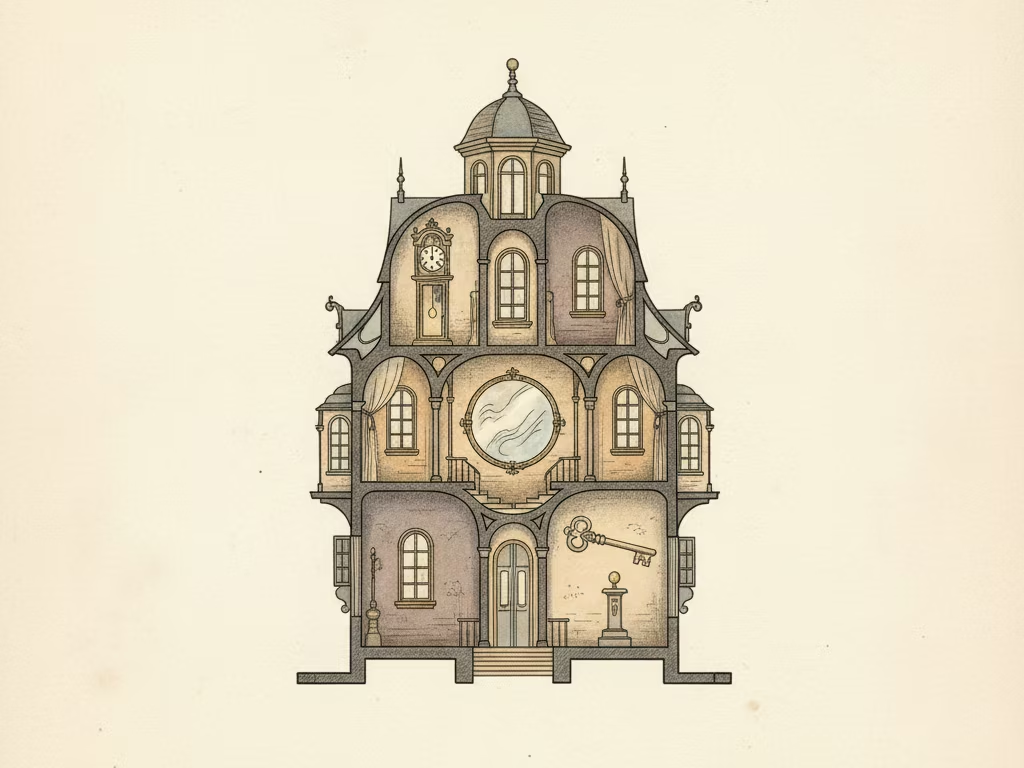
The house dream meaning is almost never about real estate. When you find yourself walking through unfamiliar corridors, opening doors that lead nowhere, or standing before a structure you somehow know is yours, the sleeping mind is using architecture as shorthand for something far closer. I’ve spent years working with dreamers, and I can say with confidence that this dream dictionary house entry is one of the most universal: the house is a map of the person who lives inside it.
In this article:
- Common Scenarios
- The Psychology
- Spiritual Interpretations
- Your Emotions
- What to Do After
- Common Questions
You’re not cursed. You’re not receiving a prophecy about your mortgage. A dream about a house is your mind working through questions it can’t resolve in waking hours — questions about identity, security, family, or the parts of yourself you keep in locked rooms. The conditions of the house carry the message: flooded, burning, empty, collapsing, invaded. Each carries a distinct emotional signature. But the starting point is always the same. The house is you, and what happens to it reflects what’s happening inside.
Common Scenarios When You Dream About a House
House dreams rarely arrive without a specific scenario. The version that stayed with you through the morning almost always belongs to one of these recurring patterns. Each scenario in the dream dictionary house tradition points toward distinct emotional territory, and identifying which version you experienced is the first step toward understanding it.
Dreaming of a House Being Robbed or Broken Into
When you dream about house being robbed, the violation feels personal because it is. To dream about house being robbed typically surfaces when you feel that something essential has been taken or threatened. This could be an emotional boundary crossed at work, a relationship where you’ve started losing yourself, or a slow erosion of confidence you haven’t yet named out loud.
In my experience, this particular house dream symbol arrives most often during periods of transition — a new job, a move, a major relationship shift — when the edges of identity feel porous and negotiable. The intruder in the dream isn’t usually a stranger in the way we’d expect. More often it represents an internal pressure: a version of yourself you’ve been ignoring, or an outside influence you sense but can’t quite place.
Dream interpretation of a house being robbed asks you to examine where you feel exposed right now. What boundary has become unclear? What did you used to hold that’s no longer fully in your grasp?
Dreaming of a Flooded House
A dream about a flooded house brings water into an enclosed space, and water in the dream vocabulary consistently represents emotion. This house dream symbol points toward emotional overwhelm: feelings that have risen beyond their expected channels and are now filling spaces where you thought you had solid ground.
If the water’s clear and calm, a dream about house flooding may suggest that you’re processing emotion with surprising steadiness. Murky, rising water tells a different story: feelings that are becoming harder to manage, grief or anxiety that’s expanded past what daily life gives you room to hold.
Dream meaning of house flooding often intensifies after major losses, relationship endings, or prolonged stress. The sleeping mind reaches for this image because it captures what language struggles to say — the sensation of being in over your head without quite sinking.
Dreaming of Your Childhood Home
The childhood home is among the most emotionally loaded versions of this dream symbol. A dream about your childhood home pulls you back not just to a place but to a time — to the person you were before adult life layered its changes onto you.
This house dream may carry warmth and nostalgia, especially if childhood held safety. It may carry anxiety or dread if those walls held difficult years. Dream interpretation of the childhood home often surfaces at crossroads: when you’re deciding something important, when the present feels uncertain, or when some unresolved piece of the past is pressing to be acknowledged.
The sleeping mind returns to the original house because that structure carries the original blueprint. Early assumptions about safety, love, and belonging still shape how you move through the world decades later.
Dreaming of an Empty House
An empty house in a dream is unusual in its stillness. Where most house dreams pulse with activity, the dream about an empty house holds a quieter kind of charge, sometimes unsettling, sometimes peaceful, depending on what the dreamer brings to it.
The house in dream here often signals a sense of absence: loss, loneliness, or a feeling that something familiar has been vacated. This version tends to arrive after children leave home, after a long relationship ends, or after a career shift that strips away a familiar identity. The rooms are the same. The life that filled them is gone.
Occasionally the emptiness feels spacious rather than hollow, a cleared structure waiting to be inhabited differently. If that was the sensation, the dream may be pointing toward possibility rather than grief.
Dreaming of a House Falling Apart or Collapsing
When you dream about a house falling apart, the structure itself becomes a statement about the dreamer’s psychological state. Walls cracking, ceilings sagging, foundations giving way: this dream about house collapsing tends to arrive when something foundational in waking life is under sustained pressure.
Overwork that’s gone on too long, relationship strain that hasn’t been addressed, health concerns that keep being pushed aside: these are the conditions where the sleeping mind starts sending images of structural failure. Dream interpretation of a house falling down isn’t a prediction. It’s a diagnostic. The sleeping mind is naming what conscious life has been working hard to minimize.
In my years with dreamers, this house dream rarely surprises people when they sit with it. They usually know what’s crumbling. The dream names it before they’re ready to say it aloud.
Dreaming of a House Fire
A dream about home fire sits at the intersection of destruction and transformation. Fire in dreams isn’t a simple symbol. It burns and clears in equal measure, and the house fire dream holds both possibilities at once. You can read more about this specific version in our piece on house fire dreams.
Dream interpretation of a house catching fire often points toward anger — particularly anger that’s been contained too long, building heat in the psychological interior until it finally erupts. In my experience, the emotional tone the dreamer carries out of this dream is the primary interpretive signal. But fire also carries the meanings of change, passion, and the burning away of what no longer fits. The dreamer’s emotional response to the fire matters as much as the image itself: horror in the dream points toward anxiety; something closer to relief might suggest a readiness to let the old structure go.
Dreaming of Your Grandmother’s House
A dream about your grandmother’s house is among the most tender variations of this symbol. Grandparents’ homes often hold a particular quality of time: slower, more settled, infused with memory and the scent of specific rooms that no longer exist as they once did.
This house dream symbol may be direct: grief for someone lost, or longing for the ease of earlier years. But the grandmother’s house in dreams also often represents inherited wisdom, the lineage of family knowledge, and a connection to roots that contemporary life has a way of thinning. In my work, I’ve found grandmother’s house dreams often arrive when someone has recently experienced a loss — not necessarily of the grandmother herself, but of some quality of groundedness she represented. The sleeping mind uses this setting when the dreamer needs grounding, when the present feels too fast or too unmoored from what matters most.
The Psychology Behind House Dreams
Sigmund Freud saw the house as a representation of the body, with windows as eyes and the facade as the face we present to the world. Carl Jung offered something broader: the house as a symbol of the psyche itself, with different rooms corresponding to different layers of consciousness. The basement, in Jung’s framework, holds what’s stored below ordinary awareness. The attic corresponds to memory and elevated perspective. The ground-floor rooms map to daily functioning and the self we manage in public.
Modern sleep researchers have moved past these early frameworks while preserving what they got right: the house in dreams consistently tracks the dreamer’s relationship to self, shelter, and psychological security. Studies of recurring dream environments show that the home is the most frequently reported dream setting, suggesting that the brain has hard-coded this structure as a primary container for personal material.
What does it mean to dream about house imagery from a psychological standpoint? The dream’s using architecture to organize and externalize interior states. The structure makes legible what the waking mind can’t quite face directly. A robbed home externalizes a sense of violation. Collapsing walls map structural stress onto a three-dimensional image. The flooded house gives shapeless anxiety a physical form.
Sleep researchers also note that house dream experiences intensify during life transitions. Moving home, ending or beginning significant relationships, facing illness, losing someone close: these events reliably increase house dream frequency. The sleeping mind ramps up its use of this symbol precisely when questions about identity and security are most active.
I’ve noticed this pattern repeatedly: the more a person’s sense of self is in flux, the more vivid and frequent their house dreams become. The unconscious isn’t confused by these periods. It’s working harder.
Spiritual and Cultural Interpretations
The house as dream symbol appears across traditions spanning continents and centuries, and the consistency of interpretation across those traditions is worth sitting with.
In Indigenous North American traditions, the dwelling represented the self in relationship to community. What the house dream symbol held wasn’t only individual psychology but the dreamer’s connection to something larger. A threatened home was a threatened sense of belonging, not just to oneself but to the people and land around.
In Chinese dream interpretation, the house often corresponds to the family unit and its stability. Dreams of house construction historically signaled prosperity on the horizon; dreams of damage or collapse pointed toward disruption within the family structure.
The house in dream is also connected to astrological symbolism in meaningful ways. The fourth house in a natal chart governs home, family, and roots. Cancer, the sign associated with that placement, rules the instinct to shelter and nurture — the same instinct the sleeping mind processes through house imagery. If Cancer or fourth-house planets are prominent in your birth chart, house dreams may arrive with particular frequency and emotional intensity.
In Jungian-influenced spiritual practice, the house in dream represents the entire self: what’s visible from the street, what’s held in private interior rooms, and what’s stored in the basement beyond ordinary daily access. Walking through an unfamiliar house in a dream often means encountering aspects of the psyche the dreamer hasn’t yet fully met.


What Your Emotions Tell You During a House Dream
The house dream meaning shifts substantially based on what you felt while inside the structure. Two dreamers can walk through the same ruined building and come away with different messages, because the emotional signature of the dream is at least as important as the image itself.
Fear or anxiety inside the house often tracks with feelings of personal threat in waking life. Something feels unsafe, unpredictable, or beyond your control. The house has become a space of danger rather than shelter.
Curiosity or wonder, discovering rooms you didn’t know existed or exploring corridors with interest rather than dread, frequently signals psychological growth. The sleeping mind uses the expanding house to represent the process of discovering new aspects of identity that are becoming available.
Sadness or grief inside a house dream typically corresponds to real loss: of a relationship, a phase of life, or a version of yourself that no longer fits. The emotion in the dream tends to closely match the emotion the dreamer is carrying in waking life.
Relief or calm in a warm, stable house usually does what it appears to do: offers genuine reassurance. These house dreams tend to arrive when waking life, despite its difficulty, has a core of steadiness worth trusting.
Trapped or constrained feelings — unable to find the exit, walls closing in, doors that won’t open — map directly onto situations where the dreamer feels stuck. The house has become a prison, and the sleeping mind is naming what conscious life has been avoiding.
What to Do After This Dream
House dreams carry specific information, and there are concrete ways to work with what they bring.
Write immediately. A house dream holds detail that disappears fast: the condition of the rooms, which floors you visited, whether the doors opened or stayed locked, who else was there. Capture it before the waking mind smooths over the edges.
Map the rooms to your current life. The bedroom often corresponds to intimacy and privacy. The kitchen to nourishment and daily sustenance. The basement to what’s hidden or unprocessed. Note which rooms appeared in your dream, what their condition was, and what they contained.
Locate the stressor. If the house was damaged, threatened, or invaded, ask directly: what in my waking life feels like this right now? The specific dream about house scenarios (flooding, breaking in, falling apart) tend to be precise enough that the real-life parallel becomes recognizable once you look for it honestly.
Consider what the house needs. Clear quartz is traditionally associated with clarity and the cleansing of residual emotional energy, qualities that can be useful when a house dream has left confusion or unease. You can read more about working with this stone in our piece on clear quartz meaning and properties. Some dreamers find it helpful to hold or place near the bed when house dream cycles are recurring.
Talk to someone. House dreams that repeat, particularly those involving threat, damage, or entrapment, sometimes carry material better processed with a therapist or someone trusted. The dream’s not dangerous, but what it points toward may benefit from more than private reflection.
I’ve found that the dreamers who do something with the information a house dream brings, even something small like writing it down or naming the stressor, tend to see the recurring version slow down. The sleeping mind stops sending urgent messages once it’s confident the waking mind has received them.
Common Questions About House Dreams
What does it mean to dream about a house?
The house in dreams almost universally represents the self, specifically the psychological structure of who you are. Different rooms correspond to different aspects of inner life: the basement holds what’s unconscious, the bedroom holds intimacy and privacy, the attic holds memory. The condition and events inside the house reflect your current psychological and emotional state.
What does it mean to dream about house being robbed?
To dream about house being robbed or broken into typically signals feelings of violation, vulnerability, or boundary erosion in waking life. If this dream repeats, the underlying situation hasn’t been resolved. Identifying what feels invaded in your actual life — your time, your identity, your sense of safety — is usually where to start.
What’s the house dream meaning when the house is flooded?
A flooded house dream points toward emotional overwhelm, feelings that’ve risen beyond your expected containment. The state of the water matters: clear water often suggests you’re processing something steadily; murky or rising water suggests feelings that’re becoming harder to manage and may need attention.
What does it mean to dream about house collapse?
In the dream dictionary, house collapse is one of the more urgent symbols — not as prediction, but as the sleeping mind’s way of naming sustained pressure on something foundational. Sustained overwork, relationship strain, neglected health: these are the usual contexts. The dream arrives to say something needs attention before the weight becomes unmanageable.
What does a childhood home mean in a dream?
Dreams of a childhood home appear most often during life transitions, unresolved questions about the past, or periods when foundational beliefs about safety and belonging are being re-examined. The sleeping mind pulls you back to the original blueprint when something in the present is asking you to revisit what was built there.

