
Dream About Train: Dream Interpretation Train Guide for Every Scenario
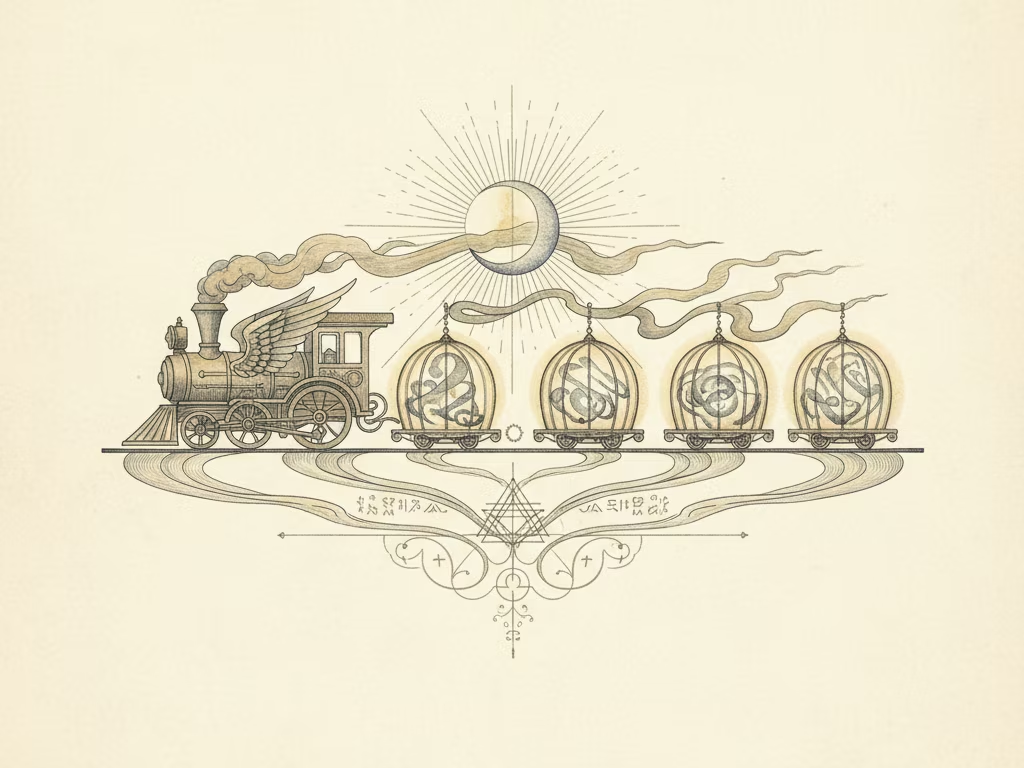
Dreams about trains rarely feel random. A train arriving on time carries a different charge than one you missed by seconds, or one barreling through darkness with no clear destination. In my years of working with dream imagery, train dreams come up more than most people expect. The dream interpretation train tradition across psychology, folklore, and cultural analysis consistently maps this symbol onto the relationship between individual will and external momentum. Whatever scenario you experienced last night, the meaning is almost always about direction, timing, and control.
If you dreamed about a train, you’re not cursed and you’re not receiving a literal message about rail travel. The sleeping mind reaches for this symbol because trains are among the few things in the world that move on fixed tracks. They can’t swerve. They don’t stop easily. They arrive according to schedules that exist independently of the passenger. That rigidity is precisely what makes the train dream so emotionally loaded.
In this article:
- Common Scenarios
- Train Types
- Psychology Behind
- Spiritual and Cultural Interpretations
- Your Emotions
- What to Do After
- Common Questions
Train dream meaning, at its most basic: your mind is working through questions about whether you’re on the right track in some area of life. This guide covers every major scenario, the psychology behind the symbol, and what you can actually do with the information once you wake up.
Common Scenarios in Train Dreams
Missing the Train
This is the most common train dream scenario I hear about, and for good reason. It’s one of the clearest anxiety images the subconscious produces. When you dream about missing a train, that missed train almost always represents an opportunity you fear is slipping away, a deadline pressing against you, or a life stage you worry you’ve passed.
The emotional texture matters enormously here. Running for the train and just catching the door reads differently than watching it pull away from a platform where you stand frozen. The first suggests urgency with agency still intact. The second points toward paralysis, usually connected to a real situation where you feel unable to take decisive action.
Dreams about trains you’ve missed tend to cluster around major transitions: career changes, relationship decisions, educational windows. The train isn’t the opportunity itself. It’s the window in which the opportunity exists. When that window closes in the dream, my experience is that the dreamer is processing a real fear about timing in their waking life.
Being on a Moving Train
A dream about being on a moving train is generally more neutral than people expect. The key questions: Do you know where it’s going? Are you comfortable? Does the speed feel right?
When the train moves smoothly and you feel settled, this train dream reflects alignment. You’re on a path that suits you, making progress at a pace that feels sustainable. When the train moves too fast and you can’t get off, the image often surfaces when real life has taken on momentum you didn’t consciously choose. A relationship moving toward commitment before you’re ready. A job that consumes more than you signed up for.
Train in dream imagery where the dreamer feels like a passenger who didn’t choose the destination frequently points toward feelings of being swept along by external forces: family expectations, cultural scripts, institutional structures. I’ve noticed that people in career transitions produce this dream more than almost any other group.
A Train Crash or Derailment
Dreams about train crashes or derailments can be alarming to wake from, but they rarely predict disaster. The sleeping mind reaches for this imagery when processing anxiety about a trajectory heading toward visible failure.
When you watch the derailment from outside, you’re often processing concern about a situation you can see going wrong but feel unable to stop. When you’re on the train that crashes, the dream speaks more directly to your own path and whether what you’re currently doing is sustainable.
These dreams tend to appear during burnout, overcommitment, or when an approach to a problem genuinely isn’t working. The crash is the dreaming mind’s dramatic way of asking: where does this track actually lead?
A Train That Won’t Stop
A train that can’t slow down, that blows past stations or loses its brakes, maps onto experiences of feeling unable to disengage from something. This might be a relationship you can’t step back from, a compulsive pattern that has taken over, or a project that keeps expanding beyond its original scope.
The train that won’t stop in a dream meaning is often about momentum as a problem rather than an asset. Speed is useful when you want to move forward. It becomes threatening when you need to pause and reassess.
An Empty or Abandoned Train Station
Standing in an empty train station, where trains that should arrive aren’t coming and timetables no longer match reality, is one of the lonelier images in the train dream family. This scenario often accompanies life stages of waiting: for career movement, for relationship clarity, for a decision to resolve itself.
Dreams about trains in this context aren’t usually about missed opportunities but suspended ones. The platform is still there. So are you. Nothing is moving yet, but the tracks remain. I’ve found that this dream often precedes a period of real movement: the mind is processing the discomfort of limbo before life actually shifts.
A Train Journey Through Unknown Landscape
When the train dream involves a long journey through unfamiliar terrain, forests, mountains, cities you don’t recognize, the emotional quality of the landscape carries the interpretation. Beautiful and expansive scenery suggests openness to an uncharted path. Dark or threatening territory suggests anxiety about what lies ahead on the current course.
This variation of the dream about train often appears at the beginning of significant life changes, when a direction has been chosen but the outcome is still unknown.
Train Types and What They Signal
The kind of train appearing in your dream adds a layer that’s worth noticing. My interpretation shifts depending on the type, and I’ve found that clients who note the specific kind of train in their dream often unlock a detail that clarifies the whole image. Before the memory fades, it’s worth asking: was the train familiar, futuristic, historical, or something unusual?
Steam trains carry a weight of history and nostalgia. A steam engine in a train dream often connects to the past: family history, old ways of doing things, or longing for a time when life moved at a different pace.
Modern high-speed trains lean toward ambition and efficiency. Dreams featuring bullet trains often accompany periods of intense professional focus or competition.
Freight trains, cargo-heavy, slow-moving, functional, tend to appear when you’re processing burdens you’re carrying through life. Not passengers but weight. Not direction but load.
Toy or model trains sometimes surface when something that felt serious in waking life has been reduced in the dream to something manageable, even playful. Or conversely, when adult ambitions feel somehow diminished compared to what you expected from yourself.
Underground or subway trains occupy a distinct space in the train dream vocabulary. The underground location adds a layer of the subconscious: what’s below the surface, hidden, or not yet visible to others. Dreams about subway trains tend to concern aspects of your life that are moving but not publicly visible, private transitions, interior changes that haven’t yet emerged into the open.
A train going in the wrong direction is one of the more unsettling train images, but also one of the clearest. If you’re on a train heading away from where you want to go, the dream is rarely subtle in its meaning. Something about your current trajectory is taking you further from your actual goals rather than closer. I’d encourage anyone who has this particular train dream repeatedly to sit with the question of what they’ve agreed to that doesn’t actually serve their direction.
Psychology Behind Train Dreams
The train has been a dream image worth analyzing since Freud first addressed it in the early twentieth century. Freud associated train travel with anxiety about mortality and the irreversibility of motion. Later psychological work expanded this considerably.
Jung’s view of train dreams was less about anxiety and more about the self in relation to collective structures. For Jung, the train represents the collective path: the socially determined route that carries many people toward common destinations. To miss the train in Jung’s framework is to fall behind the collective schedule. To board it willingly is to accept the collective journey. To derail it is to reject that path entirely.
Modern sleep research offers a more functional interpretation. Trains in dreams appear when the processing mind works through concerns about timing and control. The brain’s predictive systems, which constantly model future scenarios, produce train imagery when working through questions about forward movement, missed windows, and pace. The symbol is available to the dreaming mind precisely because it’s familiar: we all understand what it means to be on schedule or behind it.
Dreams about trains meaning, across these frameworks, consistently points to dreamer agency as the crucial variable. The difference between a healthy train dream and an anxious one often comes down to whether the dreamer feels like a passenger who chose the ticket or one who found themselves already on board without making a clear decision.
What I’ve observed over years of working with dream material is that recurring train dreams almost always cluster around moments of real-life indecision or transition. When the decision finally gets made, the dreams tend to stop.
Spiritual and Cultural Interpretations of Train Dreams
In many spiritual traditions, the train functions as a metaphor for life’s journey on a predetermined course. Islamic dream interpretation generally reads train dreams as commentary on one’s direction in life. A smoothly running train suggests the dreamer follows a right path. Disruptions indicate interference from external forces or a need to reconsider current choices.
In Chinese cultural tradition, trains carry associations with collective progress and coordinated movement. Train in dream imagery in this context often speaks to where the community or group is heading rather than where the individual wants to go.
In Western esoteric traditions, particularly those drawing on The Chariot tarot card, the train in dreams connects directly to themes of control, momentum, and directed movement. The Chariot governs Cancer season and speaks to emotional navigation through determination. When The Chariot appears in readings alongside stories of recurring train dreams, both images are pointing at the same question: who is actually steering, and toward what destination?
The train’s appearance in the global dream vocabulary is relatively recent historically. Rail travel became widespread in the nineteenth century, and with it, the train entered collective symbolic life as a vehicle of industrialization, of progress measured in schedules and platforms. This is why the train dream carries such a strong association with external time, with being on someone else’s clock.
If the journey symbolism in these dreams interests you, the themes that come up in running dreams often sit alongside train dreams in people navigating similar questions about pace, urgency, and whether to slow down.


What Your Emotions Tell You
The train dream meaning shifts significantly depending on what you felt during the dream. These emotional signatures are worth noting before the memory fades:
Relief when the train arrives: You’ve been waiting for permission or external validation of a choice. The train arriving feels like a green light.
Dread as the train approaches: Something is coming that you feel you can’t stop or refuse, even when ambivalent about it.
Excitement on the moving train: Forward momentum in waking life feels genuinely positive. You’re engaged with the direction you’re heading.
Boredom or numbness on the moving train: The path you’re on has lost meaning. You’re going through motions rather than choosing them.
Panic about missing the train: Deadline anxiety in waking life, fear of being left behind, concern about timing in an important decision.
Calm after missing the train: Sometimes the dreaming mind uses a missed train to process relief. The deadline has passed, the pressure is off, and the dreamer discovers they’re fine without having caught it. This version of the dream about train can be a release dream rather than an anxiety dream.
Paying attention to the emotional residue after a train dream tells you more than the imagery alone. Two people can have nearly identical train scenarios and be working through entirely different things in their waking lives.
What to Do After This Dream
If your train dream left you with unease or a sense that something needs attention, these practical steps tend to help:
1. Identify the real-world track. What is the fixed path in your waking life right now? A job, relationship, plan, or commitment that carries its own momentum? The train dream is usually pointing somewhere specific.
2. Ask whether you chose this direction. One of the clearest signals in dream interpretation train traditions is the distinction between chosen and unchosen movement. Were you a willing passenger or someone who found themselves already on board?
3. Note the timing in the dream. Dreams about trains that are too late or too early are usually about timing in waking life: a decision that needs making, or one you’re pushing toward before you’re ready.
4. Write the emotional texture. Before the imagery fades, write down what you felt during the train dream, not just what you saw. The feeling is often the more direct signal from your processing mind.
5. Look at the pattern across dreams. A single train dream is interesting. Recurring train dreams, the same missed train, the same derailment scenario, are worth more sustained attention. Recurring imagery suggests an unresolved question the sleeping mind keeps returning to. I’ve worked with dreamers who had the same missed-train image for months, sometimes years, and almost without exception the dream stopped once they made the decision they’d been avoiding.
People who experience recurring train dreams often find they stop once a long-deferred decision finally gets made or a stuck situation finally moves. The dreaming mind stops asking a question once it’s been answered. Sometimes that answer comes from action, and sometimes it comes simply from accepting that you’ve already missed something and are still standing.
If the direction themes in this dream resonate, the Sagittarius archetype explores how optimism and forward movement interact with life’s larger trajectory. Sagittarius governs the long journey, the distant horizon, and the question of whether the destination you’re headed toward is the one you actually want.
Common Questions About Train Dreams
What does it mean to dream about a train?
In dream interpretation train traditions across psychology and folklore, a train dream almost always concerns direction, timing, and control. The train moves on fixed tracks according to external schedules. When you dream about a train, your processing mind is usually working through whether the path you’re currently on is one you chose, whether you’re moving at the right pace, and whether the destination you’re heading toward is where you actually want to go.
What is the train dream meaning when I keep missing the train?
Recurring missed train dreams almost always reflect anxiety about timing in waking life: a window you fear is closing, a deadline pressing on you, or a life stage you worry you’ve passed. The key emotional signal is how you feel after missing it. Panic usually means real deadline anxiety. Calm or even relief suggests you may actually want out of whatever the train represents.
What do dreams about trains meaning in different traditions?
Dreams about trains meaning varies somewhat by tradition. Western psychology emphasizes the collective schedule and questions of agency. Islamic interpretation often reads the train as commentary on life direction. Chinese cultural tradition focuses on collective momentum. Western esoteric traditions connect the train to The Chariot’s themes of directed will. Across all of them, the train dream dictionary reads this symbol as connected to forward movement and whether the dreamer is steering or being steered.
What does train in dream meaning suggest about my waking life?
Train in dream meaning is almost always specific to something in your current circumstances. Look for the fixed path: a commitment, relationship, career, or life plan that has its own momentum. The dream is asking you to look at that path directly and decide whether you’re choosing it consciously or simply riding along. The dream interpretation train you experience is a map, not a prophecy.
What does the dream dictionary train say about train crashes?
In the dream dictionary train tradition, a crash rarely predicts literal disaster. It reflects the dreaming mind working through anxiety about a trajectory that’s unsustainable or heading toward visible failure. The crash is a dramatic amplification of concern about something in waking life. Treat it as a signal worth taking seriously, not a prophecy about actual trains.

