
Solar Plexus Chakra: Meaning, Location, and How to Balance It

The solar plexus chakra location is in the upper abdomen, roughly two to three inches above the navel. This third energy center is called Manipura in Sanskrit, meaning “city of jewels.” Its color is yellow, its element is fire, and its ruling planet is Mars. The solar plexus chakra governs personal power, self-confidence, and the capacity to act on your intentions. In my practice, I’ve found this to be the chakra most directly tied to how people experience agency in their own lives. When it is functioning well, people feel grounded in their own authority: not aggressive or domineering, but steady and self-directed. When it’s blocked or overactive, that authority either turns inward as chronic self-doubt or outward as controlling behavior. Solar plexus chakra meaning, at its core, answers one question: who is actually running your life?
In this article:






What Is the Solar Plexus Chakra
The solar plexus chakra location is in the upper abdomen, between the navel and the sternum. Physically, this region maps onto the digestive organs: stomach, liver, pancreas, and adrenal glands. That’s not coincidental. The celiac plexus, a dense bundle of nerves in this area, is sometimes called “the abdominal brain” because of how extensively it communicates with the central nervous system. Energetically, Manipura is the seat of will.
Among the seven chakras, number 3 places the solar plexus in the middle of the lower triad. Above the root (earth, survival) and sacral (water, desire), and below the heart (air, love), it occupies a transitional role. Where the root asks “Am I safe?” and the sacral asks “What do I want?”, the solar plexus chakra asks “Can I actually make it happen?” The fire element here is metabolic rather than destructive — it converts experience into identity and intention into action.
One of the reasons I pay close attention to the solar plexus chakra with new clients is that blockages here tend to masquerade as other problems. Someone who says they’re “not motivated” often has a blocked Manipura rather than a root chakra issue. Someone who describes feeling emotionally flat may actually have too much will locked in and nowhere for it to go. Knowing the full solar plexus chakra description (what it governs, where it sits, how it expresses when off-balance) helps distinguish what’s actually stuck from what’s being misidentified.
Quick reference:
– Sanskrit name: Manipura
– Number: 3
– Color: Yellow
– Element: Fire
– Planet: Mars
– Location: Upper abdomen, between navel and sternum
– Governs: Personal power, willpower, self-esteem, digestion
Signs of Balance and Imbalance
Balanced
In my practice, a balanced solar plexus chakra shows up as someone who knows what they want and can pursue it without needing to dominate others in the process. They take responsibility without excessive guilt. They hold a position without crumbling when challenged. Physically, digestion tends to run steadily and appetite is regulated. Energy sustains rather than spikes and crashes.
Confidence from a healthy Manipura doesn’t need external validation. It’s quiet, the kind that lets you make a decision, commit to it, and adjust course without drama if new information arrives.
Blocked
A blocked solar plexus chakra often surfaces as chronic indecision. I hear clients describe it as “not wanting to rock the boat” or perpetually deferring to others even when they know their own answer. There’s a particular stomach feeling that accompanies this: a low-grade dread before any confrontation, or a heavy sluggishness after meals. Procrastination, people-pleasing, and the ongoing belief that you don’t deserve to take up space all trace back to an underactive Manipura.
One pattern I see often is what I’d call “borrowed confidence” — the person who performs certainty in public but internally looks to others for constant reassurance. They often have a strong outer presentation and a very hollow center. Solar plexus work for this type involves learning to disagree out loud, make commitments without checking every angle first, and tolerate the discomfort of having preferences that not everyone will like.
Overactive
An overactive solar plexus chakra gets misread as strength. What I see instead is compulsive control — the client who can’t delegate, can’t rest, and turns every interaction into a test of who’s in charge. Stomach symptoms tend toward reactivity: acid reflux, tight cramping, or inflammation. The need to be right overrides the willingness to be in relationship.
How to Open and Balance the Solar Plexus Chakra
Working toward solar plexus chakra balance means addressing both the physical and energetic layers at once. The methods I return to most often:
Meditation: Sit with hands resting on the upper abdomen, fingers pointing toward each other. Visualize a yellow flame at the Manipura center — not consuming, but radiating outward in a steady ring. On each inhale, the flame brightens. On each exhale, it stabilizes. Ten minutes is enough to notice the belly soften.
Affirmations: Manipura responds to statements of agency. “I trust my own judgment.” “I complete what I start.” “I take up the right amount of space.” Say each one once, clearly, rather than repeating in rapid succession — this chakra reads sincerity better than volume.
Sound: The seed mantra for the solar plexus chakra is RAM (pronounced “rum”). Chanting it at a consistent pitch while pressing fingers gently into the upper abdomen can release tension stored in the stomach muscles. Pairing it with a 528 Hz tone supports the confidence and creativity themes associated with Manipura.
Yoga: Poses that build heat in the core activate the solar plexus chakra. Navasana (boat pose), Dhanurasana (bow pose), and any twisting sequence (seated spinal twists especially) are reliable tools. Staying in a pose slightly longer than feels comfortable is itself a solar plexus practice: the decision to hold is the work.
Food: Yellow and warming foods align with this chakra’s themes. Whole grains, bananas, ginger, turmeric, chamomile tea, and fermented foods all support the digestive organs the solar plexus chakra governs. Irregular eating patterns like skipping meals or grazing without intention tend to destabilize this center even when other practices are in place.
Crystals: Citrine and pyrite are the stones I reach for most in this work (see the Crystals section below).
Energy work complements but doesn’t replace medical care — if you’re experiencing persistent digestive symptoms, ongoing anxiety, or significant mood dysregulation, a healthcare provider belongs in the conversation alongside any energetic practice.


Crystals for the Solar Plexus Chakra
Two stones stand out consistently in solar plexus work:
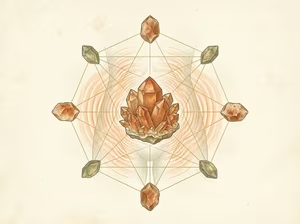
Citrine is the most direct correspondence. Its yellow color matches Manipura exactly, and its traditional association with confidence, personal clarity, and financial follow-through aligns with the chakra’s themes. I place a tumbled citrine on the upper abdomen during the seated meditation above, or keep one on a desk where decisions get made. It’s one of the few crystals that many practitioners consider self-clearing.
Pyrite is the less obvious but often more necessary choice. Traditionally called “fool’s gold,” it addresses the relationship between effort and reward — particularly useful when the solar plexus block shows up as the belief that hard work won’t pay off or that success belongs to other people. Clients who feel perpetually overlooked or undervalued at work often respond well to carrying pyrite through the workday.
Both stones work with the fire element and can be placed on the upper abdomen during meditation or held in the hands during breathwork. I sometimes recommend keeping citrine in a workspace and pyrite in a pocket or bag during the workday — citrine supports the clarity of decision-making, while pyrite addresses the effort-and-reward loop that keeps some people perpetually working without feeling they’ve earned the results. They don’t conflict; if anything, they address two different failure modes of the same chakra.
Solar Plexus Chakra and Astrology
The solar plexus chakra is governed by Mars, making the connection to Aries immediate. Aries carries the same initiating fire — the capacity to act without waiting for permission or consensus. People with prominent Aries placements tend to have a naturally active Manipura, though they may need to develop the sustained patience this chakra also requires alongside its drive.
Leo connects through the fire element and through the solar themes of self-expression and personal authority. Where Aries represents the first impulse of will, Leo represents the ongoing performance of identity — both are solar plexus expressions, just at different stages.
The tarot’s Strength card maps directly to this chakra’s central teaching. The traditional image shows a figure subduing a lion not through aggression but through calm, steady presence. That’s what a balanced solar plexus chakra looks like in practice: not dominance over others, but settled authority over oneself.
It’s worth spending time with how Aries, Leo, and the solar plexus chakra interact differently. Aries brings the spark — the initial charge of “I will do this.” Leo carries the flame forward — “I am this, in front of everyone.” The solar plexus chakra in balance holds both: the initiation and the sustained identity. In my work with clients who have fire-sign placements but feel chronically blocked, the issue is usually that the fire is running but isn’t organized. Manipura work adds the container that turns raw fire into usable force.
Common Questions About the Solar Plexus Chakra
What is the solar plexus chakra?
The solar plexus chakra, or Manipura, is the third energy center in the body. It sits in the upper abdomen and governs personal power, self-esteem, willpower, and the physical organs of digestion.
What does solar plexus chakra meaning refer to?
Manipura translates to “city of jewels” in Sanskrit. The core meaning centers on personal authority and agency; this is the chakra that shapes whether you trust yourself to act on your own behalf.
Where exactly is the solar plexus chakra location?
The solar plexus chakra location is in the upper abdomen, between the navel and the sternum. It corresponds anatomically to the stomach, liver, pancreas, and adrenal glands.
What is the solar plexus chakra description in terms of color and symbol?
The color is yellow, reflecting both the fire element and its connection to solar energy. The traditional symbol is a downward-pointing red triangle inside a ten-petaled yellow lotus.
How do I know if my solar plexus chakra is blocked or overactive?
A blocked solar plexus chakra typically shows up as indecision, difficulty asserting needs, digestive sluggishness, and a sustained sense of powerlessness. An overactive version tends toward control behavior, disproportionate anger, and stomach inflammation rather than sluggishness.


